
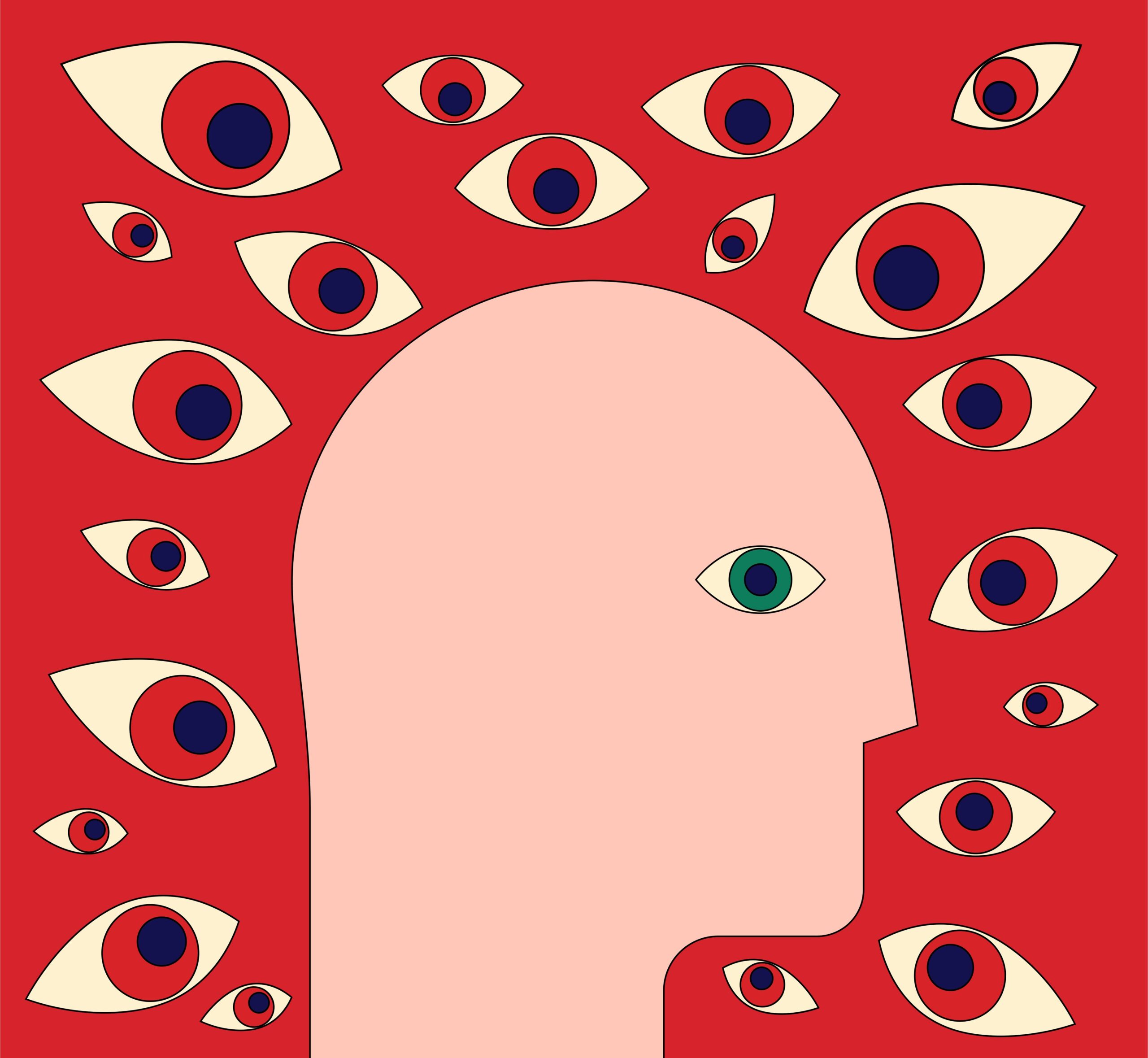
Dissociation describes an extreme way that the mind can use to cope with too much stress. In its most extreme form: if we find ourselves in an unbearable situation, experiencing pain (physical and/or psychological) and fear, but we can’t escape from that situation, then it’s possible for our personality to “dis-integrate”, to fragment, so that a part of us can remain present in our body to endure the unbearable situation whilst another part retreats inside to escape the suffering. This is an adaptive way of coping that often begins in childhood since children are powerless to escape the families, schools and communities in which they find themselves: dissociation can allow a child to survive the most awful circumstances imaginable and yet still go to school. However, once the body and brain have learned to dissociate to survive it tends to continue to do that, which means that in adulthood the individual is likely to dissociate when their threat response (fight/flight/freeze) is triggered, and this can have profoundly adverse effects on their ability to maintain work and relationships.
Dissociative experiences can vary between feeling disconnected from yourself (depersonalisation) and the world around you (derealisation), forgetting about certain time periods, events and personal information (dissociative amnesia), feeling uncertain about who you are, having multiple distinct identities (personalities or parts), and feeling little or no physical pain. Some people with dissociative disorders have seizures which can vary from fainting to something more like an epileptic seizure.
Some experiences of dissociation can be short-lived, perhaps following a traumatic life event, and resolve on their own over a matter of weeks or months. Others can last much longer and come and go over many years. Those who experience dissociation may also experience other health challenges such as: medically unexplained symptoms, post-traumatic stress, depression, mood swings, anxiety and panic attacks, suicidal ideation or self-harm, disordered eating, obsessions and compulsions, as well as problems sleeping (insomnia).
There are many possible causes of dissociation, including previous traumatic experience, physical, sexual or emotional abuse during childhood, after experiencing war, kidnapping or even an invasive medical procedure. If you experience a lot of dissociation, you might also have a dissociative disorder diagnosis, such as depersonalisation-derealisation disorder, dissociative amnesia or dissociative identity disorder (DID – formerly referred to as Multiple Personality Disorder).
Working with complex trauma is not straightforward, we can’t just dive straight into what happened to you: as a survivor you would be at risk being overwhelmed and retraumatised. But neither can we avoid processing traumatic material forever. The answer lies in a phased approach, building the blocks of safety and stabilisation first, before delving into processing the trauma second, and then finally integrating these experiences into future living.
In phase one of therapy, I provide neuroscience psychoeducation so that my clients can fully understand what’s going on and why, that their bodies and brains are reacting in biologically correct and predictable ways: they are not broken, their feelings are entirely valid. I then teach them how to notice that their threat response has been triggered and what kind of people/situations/places/relational dynamics tend to cause that (different for each of us). Then we focus on the skills, tools and tactics needed to find their way to rest and digest, as soon as possible, so that they can think straight and feel comfortable, both physically and emotionally. We also spend time considering new choices about developing healthy habits (physical, emotional and cognitive) which will help to ensure that their threat response is less sensitive (less easily triggered, less often). We will repeatedly come back to the foundations of phase one work throughout therapy, but at this point we’re ready to start phase two, consider what happened, and start to process trauma.
The combination of being truly heard by someone who understands what you’re going through (and what you’ve been through), gaining new perspectives about what’s going on and why, making new choices about what to do about the things you want to change (and grieving the things you can’t change), developing new skills and healthy habits, and feeling the benefits of those can lead to a real sense of hope and agency, which is so important for your wellbeing: you can let go of shame, embrace self-compassion, and discover your true self.
You can find out more about my therapy and fees here https://www.theexetercounsellor.com/how-it-works/ and options for contacting me here https://www.theexetercounsellor.com/contact-me/.