
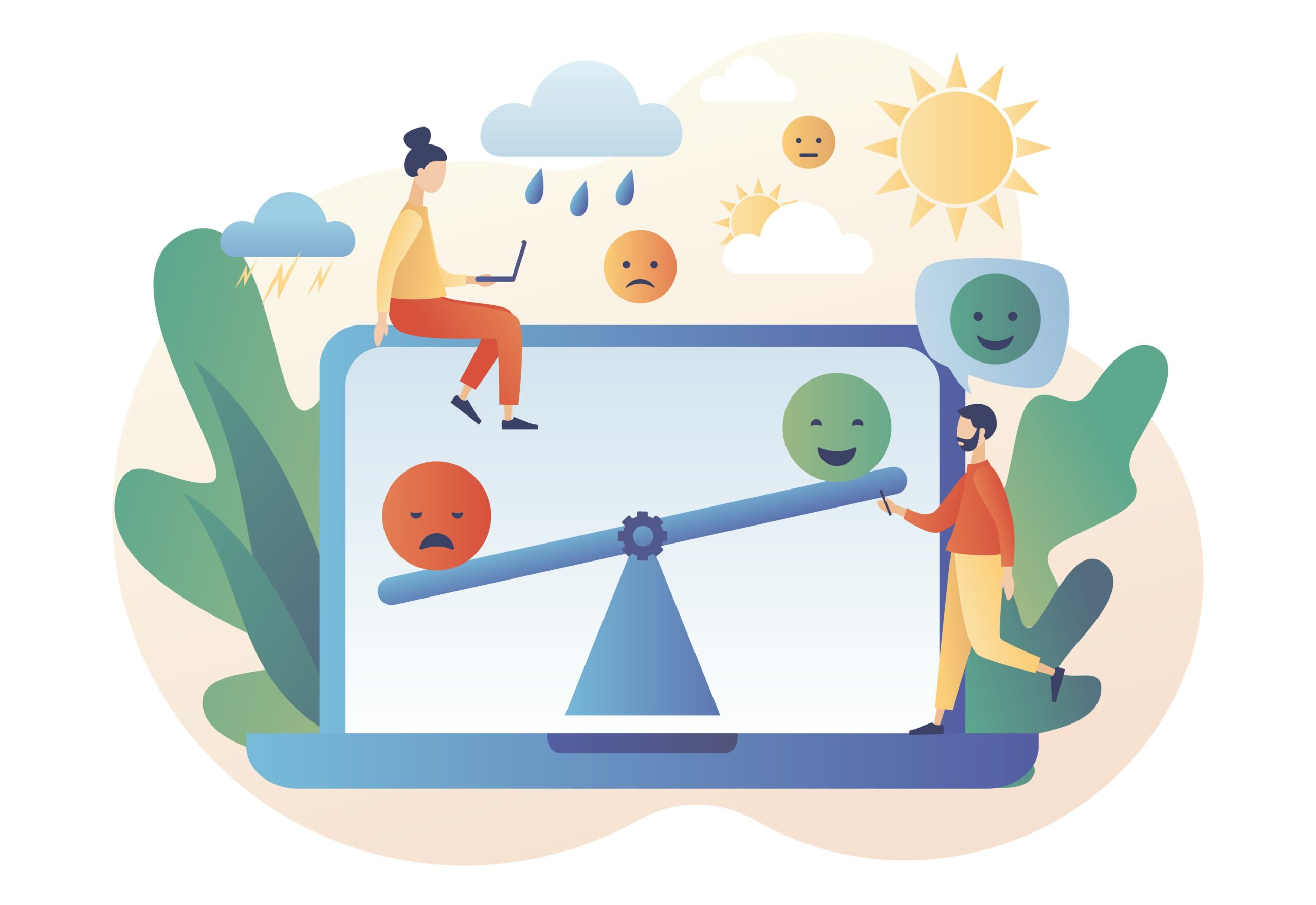
A person who experiences extreme mood swings might have received a diagnosis of Bipolar Disorder (formerly known as manic depression). Moods can last for several weeks or even longer and will swing between episodes of depression (feeling very low and lethargic), and mania (feeling very high and overactive). During an episode of depression, they may have overwhelming feelings of worthlessness, which can potentially lead to suicidal ideation and self-harm. During a manic phase, they may feel very happy, have lots of energy, ambitious plans and ideas, spend large amounts of money on things they cannot afford and would not normally want, not feel like eating or sleeping, talk quickly, become annoyed easily, feel very creative, or even experience psychosis.
I see these experiences as manifestation of great distress, rather than as symptoms of mental illness. If we find ourselves in an ongoing challenging situation, experiencing intense stress and anxiety, but we can’t escape from that situation, then it’s possible for our threat response (fight/flight/freeze) to become highly active: swinging between periods of mania (fight/flight) and depression (freeze – when we have become exhausted by our mania) might be the result. This pattern of coping may have developed in childhood, or to cope with a difficult job or challenging relationships in adulthood, but coping in that way can have profoundly adverse effects on our ability to maintain self-care, work and relationships.
In therapy I provide neuroscience psychoeducation so that my clients can fully understand what’s going on and why, that their bodies and brains are reacting in biologically correct and predictable ways: they are not broken, their feelings are entirely valid. I then teach them how to notice that their threat response has been triggered and what kind of people/situations/places/relational dynamics tend to cause that (different for each of us). Then we focus on the skills, tools and tactics needed to find their way to rest and digest, as soon as possible, so that they can think straight and feel comfortable, both physically and emotionally. We also spend time considering new choices about developing healthy habits (physical, emotional and cognitive) which will help to ensure that their threat response is less sensitive (less easily triggered, less often).
I then invite them to consider their family of origin experiences so that they can understand why they interact with others in the way that they do, can consider whether that’s hindering them, and if so, how they can learn to communicate more authentically and get what they want and need from their relationships. I also invite them to tell me their story, when they’re ready, to consider their ancestors experiences (inherited family trauma may be relevant), their childhood experiences, and everything that they have experienced since then, good and bad, to help them to make sense of why they may feel the way they do, and to fully appreciate the context of their lives. Once they understand their sense of self and their “life script”, they can start to consider how they might like to change them for the better.
The combination of gaining new perspectives about what’s going on and why, making new choices about what to do about the things you want to change, developing new skills and healthy habits, and feeling the benefits of those can lead to a real sense of freedom and agency, which is so important for our wellbeing: discovering a stable life after mania and depression is possible.
You can find out more about inherited family trauma here https://www.theexetercounsellor.com/epigenetics-and-inherited-family-trauma/.
You can find out more about my therapy and fees here https://www.theexetercounsellor.com/how-it-works/ and options for contacting me here https://www.theexetercounsellor.com/contact-me/.